Presentations
Stories Written in Sand: Sediment Archives from the Wudjari Ancient Coastlines Program, Recherche Archipelago
Presented by David Guilfoyle, ETNTAC
9:30am Sunday 20 September 2026
Auditorium
Esperance Civic Centre
We all know Esperance has some of the best sand in the world, so we thought it was about time we looked a little more closely at what makes ours so special - because behind every grain lies a remarkable geological and cultural story.
As part of the Wudjari Ancient Coastlines Program, sediment grab samples are being collected from across the Recherche Archipelago to investigate the history of one of Australia's most spectacular coastal landscapes. Laboratory analyses examine grain size, shape, sorting, mineral composition, shell fragments, microfossils and organic material preserved within the sediments. Together, these characteristics provide valuable evidence for reconstructing sediment sources, transport pathways and the dynamic processes that have shaped the coastline over thousands of years.
These marine sediments function as a natural archive. They reveal whether environments were once exposed beaches, sheltered embayments, estuaries, river channels or offshore marine settings, while also recording changing sea levels, coastal erosion, sediment deposition and landscape evolution. Combined with sediment cores, seabed mapping, underwater archaeology, palaeoenvironmental reconstruction and Wudjari cultural knowledge, the research is helping reconstruct the extensive coastal plain that once connected many of today's islands with the mainland before post-glacial sea-level rise transformed the region.
The research extends well beyond surface sediments. Sediment cores recovered from the seafloor, coastal wetlands, lake beds and ancient peat bogs allow us to look back through time, with each layer representing another chapter in the history of the landscape. These natural archives preserve pollen, charcoal, organic material, microscopic organisms, geochemical signatures and other environmental indicators that reveal changing climates, vegetation, fire histories, freshwater systems and sea-level fluctuations over thousands of years. Together with seafloor sediments, these cores provide an increasingly detailed record of how the Recherche Archipelago and its surrounding landscapes have transformed through time, helping us understand not only where we are today, but the long journey that shaped this remarkable Country.
Beyond understanding the past, sediment analysis provides an essential scientific baseline for the future. It contributes to habitat mapping, environmental monitoring, coastal process studies and informed management of the Recherche Archipelago under changing climatic conditions. By integrating archaeology, geomorphology, marine science and Indigenous knowledge, the Wudjari Ancient Coastlines Program demonstrates how the smallest components of the landscape can reveal some of its biggest stories.
Most visitors simply see beautiful beaches. We see an extraordinary archive - millions of grains of sand, each carrying part of the history of Country. Together with sediments from the seafloor, lake beds and ancient peat bogs, every layer and every grain forms another page in the story of a landscape that has evolved over millennia and continues to shape the future of Wudjari Country.
Biography
David Guilfoyle is a Landscape and Community Archaeologist with more than two decades of experience working collaboratively with communities across Australia and the USA, including Alaska. His work integrates applied anthropology, archaeology, geomorphology, Quaternary science, palaeoenvironmental reconstruction and cultural landscape management to better understand the long-term relationships between people, Country and environmental change. David has led projects investigating submerged cultural landscapes, ancient coastlines, seafloor archaeology, sedimentary archives, Indigenous Protected Areas and community-led conservation initiatives, bringing together cultural science, education and research.
David supports the Healthy Land and Sea Program (HLSP) Coordinator for the Esperance Tjaltjraak Native Title Aboriginal Corporation and currently co-leads the Wudjari Ancient Coastlines Program, a multidisciplinary initiative undertaken in partnership with Senior Cultural Advisors, HLSP team, universities and research organisations to reconstruct the drowned landscapes of the Recherche Archipelago. Through the analysis of sediments, submerged landforms, archaeological evidence and cultural knowledge, the program is revealing how sea-level rise transformed the region over the past 10,000 years while developing new approaches to cultural heritage, environmental stewardship and landscape-scale conservation.
Wudjari Ancient Coastlines is supported by Parks Australia, Lotterywest and by a grant of sea time from the Southern Coastal Research Vessel Fleet, with funding from the National Collaborative Research Infrastructure Strategy (NCRIS).


Tjaltjraak Boodja Park
Where Everything Comes Together
A short documentary
produced by Jennene Riggs, Riggs Australia
Julie Waters , Environmental Coordinator,
Shire of Esperance
10:30pm Sunday 20 September 2026
Auditorium
Esperance Civic Centre
This short documentary is the fourth part of a staged project that has been delivered by the Shire and Esperance Tjaltjraak since 2021 focused on protecting Tjaltjraak Boodja Park and coastal restoration.
The documentary was produced by local film maker Jennene Riggs (Riggs Australia) and will showcase the works that ETNTAC Healthy Country Plan Ranger team and the Shire (in conjunction with other groups) have been doing to repair environmental degradation as well as highlighting the incredible biodiversity and cultural values of the reserve and why we are working so hard to protect this important place.
Tjaltjraak Boodja Park possesses a tapestry of cultural and recreational values, the reserve has high cultural value to the Kepa Kurl Wudjari people with numerous story places, burial sites, ochre sources, stone arrangements, and archaeological sites within the reserve.
The reserve is also treasured for its biodiversity and ecological values, where it protects 13 known populations of conservation-listed flora, expanses of the EPBC Act-listed ‘Proteaceae dominated kwongkan shrublands of the southeast floristic province’ Threatened Ecological Community (Kwongkan TEC), and habitat for at least 32 species of conservation-listed fauna. To date 539 native species of terrestrial flora and 49 species of native fauna have been recorded from the reserve. Charismatic conservation-significant fauna such as the Carnaby’s black cockatoo, southwestern carpet python, Recherche Cape Barren goose, and quenda delight visitors, whilst the shorelines and adjacent ocean are home to numerous migratory and sea birds, cetaceans (such as the southern right whale and blue whale), and pinnipeds (such as the Australian sea lion and New Zealand fur-seal). Recreational activities frequently pursued in TBP tend to revolve strongly around the area’s abundant natural features, with surfing, snorkelling, scuba diving, spear-fishing, shore fishing, beach-combing, nature photography, kayaking and scenic beach-driving valued highly by local and non-local appreciators alike. These values warrant the need for restorative and preventative actions to protect the natural integrity of Tjaltjraak Boodja Park for all generations to come, particularly regarding defending Tjaltjraak Boodja Park from a minority of destructive, irresponsible visitors. Some of these irresponsible recreational pursuits within Tjaltjraak Boodja Park, particularly those of some off-road recreational vehicles are harbouring growing concerns regarding the increased risk of spread of Phytophthora cinnamomi dieback through sensitive Kwongkan TEC and other susceptible coastal vegetation, accelerated coastal erosion, and infliction of damage to cultural sites.


How do Seagrasses Flower Under the Sea?
Presented by Emeritus Professor Gary Kendrick
11am Sunday 20 September 2026
Auditorium
Esperance Civic Centre
Seagrasses like dune grasses live in a dynamic and changing environment but theirs is below the sea surface. In Esperance Bay and the Recherche Archipelago they dominate sandy bottoms. Esperance is a site of diversity and a centre of evolution of temperate seagrasses. There are 16+ species representing 6 genera. Seagrasses are flowering plants, unlike the seaweeds and kelps who reproduce from gametes and spores. Seagrass evolved back into the sea approximately 100 million years ago. They have persisted through tropical periods and ice ages, through extreme temperatures and sea level changes. So how do they do that? Seagrasses are clonal, like your lawn and spread by ramifying across the sand, stabilising sediment and growing upwards towards the light. They also flower underwater. In this talk I will show how they flower and set seed, describe adaptations they have made to persist and grow in this extreme environment and how this has resulted in unique evolutionary pathways back to the sea. Seagrasses are under threat and one hectare of seagrasses die every 30 minutes across the globe. I will also demonstrate how local knowledge of flowering and seed survival has been used in seagrass seed-based restoration at greater than hectare scales to counteract these losses.
Biography
Gary's interest in seagrass flowering developed from a desire to understand their ecology and resilience in the ever-changing interface between the land and the sea. He has applied what he learnt to seed-based seagrass restoration in areas under threat of human development and climate change. Gary has spent his career working on seagrasses and seaweeds, in Australia and across the world in Malaysia, Indonesia, Ecuador, Brazil, Spain, USA and Canada. He has taught marine biology and researched seagrasses and seaweeds for 25 years at the University of Western Australia, recently retired to have more time to observe and study.


WORKSHOPS
Seaweed, Seagrass and Shorebirds:
How Beach Wrack is a Beach Buffet
Presented by Kahree Garnaut
12-1pm Sunday 20 September 2026
Auditorium
Esperance Civic Centre
The Great Southern Reef is a phenomenon in a low-nutrient ocean, thriving by using recovered nutrients from decomposed organic material to feed a myriad of seaweeds, extensive seagrass beds, and aquatic animals. The beach wrack you will find on many of Esperance’s beaches is actually a sign this ecosystem is healthy – even when it smells like compost when it warms in the sun! The seagrasses, algae and other marine fibres that accrue at the shorelines, sometimes into huge mounds, act like a beach buffet for shorebirds due to some fascinating, and somewhat stinky secrets!
The workshop will involve a brief presentation (using photo display, beach wrack sample, and other resources) about how beach wrack creates food for shorebirds and also decomposes nutrients for recycling into the coastal ecosystem; what sorts of prey / food are available and the shorebirds that benefit; some examples of adaptations of shorebirds to beach wrack; and how we can support beach wrack to do its thing for our ecosystem. The talk (~ 15-20 mins) will be followed by an inquisitive inspection using sorting trays and microscopes to inspect and discuss what we find, and how the fresh beach wrack compares to the decomposed / fermented one (mimicking the natural fermentation / decomposition that happens on the beach).
Participants should be prepared for splashes of seawater and seaweed.
The workshop is free but please register as places are limited.
Biography
Having lived in Esperance for over four years and working in the environmental / natural resource management sector, Kahree Garnaut is an avid wildlife enthusiast and ecologist hailing from the seaside town of Mandurah. After spending time on Geraldton’s very seaweedy shores, she relocated back to the south coast where she could reunite with her favourite sea, the Southern Ocean. Whether through swimming, sailing, freediving, surveying migratory shorebirds or simply taking a stroll down Wylie Bay, she loves spending time on Esperance’s beaches observing the regular residents and seasonal migrants. More recently, her position as Lake Gore Ramsar Project Coordinator at South Coast Natural Resource Management Inc. has sparked an appreciation and curiosity for the physiological phenomenon undertaken by millions of migratory shorebirds annually, with some species completing non-stop flights thousands of kilometres long from the Australian summer feeding areas to their Arctic breeding territories.


INaturalist
Presented by Jolanda Keeble
1-3pm Sunday 20 September 2026
Auditorium
Esperance Civic Centre
Are you curious about the names of plants and animals you see, or wondered if it was common or rare? In this workshop you will learn the fun and interactive way of how to share your observations, how to identify your organisms, and join projects, as well as getting hands on experience with the iNaturalist application (app) on your smart device (phone/tablet/laptop). Your contributions to this app / platform can create research quality data for scientists working to better understand and protect nature, and you will be able to join our community of >400,000 citizen scientists, all linked with the Atlas of Living Australia.
Please install the iNaturalist app on your smart device(s) and create an account prior to attending. Bring your smart device(s) with you to the workshop to gain the best experience.
The workshop is free but please register as places are limited.
or use the QR code on the poster.
Biography
Jolanda Keeble is an Ecologist and Citizen Scientist with a love for Western Australia’s plants and animals. She has been a long-time and active member of both the WA Naturalists’ Club and the Wildflower Society of WA. Since her semi-retirement in 2015 she has written three field guides for reserves in Western Australia and has recently started on the research for a field guide on the Duke of Orleans Bay area. She needs the help of local people to submit observations of animals and plants from this area to iNaturalist to build up a better understanding of the biodiversity of this incredible place.

Nature by Design:
Coastal Flora Adaptations in Botanical Art
Presented by Katie White
1-4pm Sunday 20 September 2026
Main Foyer
Esperance Civic Centre
This workshop is designed to elevate botanical art skills, while taking a deep dive (pardon the pun) into the ecology of ‘Sand Dune sand Seashore’ coastal flora. Join Katie White, local botanist and artist, for an immersive three hour workshop unpacking in tandem visual art design theory, watercolour use, and botanical artwork techniques and morphological adaptations of coastal flora as the artwork subject.
This workshop will include:
• Education on adaptations and morphological response of coastal flora to the harsh coastal
environment.
• Visual arts design theory.
• Basic introduction to the use of watercolours.
• Participants to develop a single painting focusing on coastal flora species specimens provided as part of the workshop. They will take this single painting home.
This is a free workshop but please register as places are limited.
Biography
Katie is a practicing Botanist and Environmental Scientist (B.Sc Hons). But she realised a long time ago that science was only one half of her connection to flora, and so her interlinked and intertwined love of Botanical Science and Botanical Art was born. Caladenia Co. began as a way for Katie to explore her scientific insights as a botanist and connection to the landscape as an artist. She now dabbles in many areas, all connected by wildflowers: identifying flora, botanical art, guided walks, workshops, ephemeral bush art, photography, and landscaping… Anything to do with plants!


Attune, Align, Attend: Creative Outdoor Learning Design Through the Lens of Childhood Play
Presented by Daniel Burton and Trudi Bennett
Educated by Nature
5-6pm Monday 21 September 2026
Auditorium
Esperance Civic Centre
Creative outdoor learning begins with paying attention. Before planning activities, we first notice the children, the place and ourselves. In this hands-on workshop, we explore the Attune, Align, Attend framework as a way of designing meaningful outdoor learning experiences that emerge from relationship, curiosity and observation. Through nature connection routines that awaken our senses and deepen our awareness, participants will experience how slowing down can expand creativity. We will introduce David Sobel's play motifs as a lens for recognising the patterns, interests and invitations already present in children's play, and explore how these observations can be connected with curriculum areas, environmental themes or community priorities.
The workshop combines reflective theory along with collaborative exploration. Together, we will engage in creative brainstorming and discussion that weave together children's interests, the gifts of the environment and the intentions we bring as educators, parents and community practitioners. Whether you facilitate learning in schools, early childhood settings, local government programs or environmental education initiatives, this session offers practical tools and fresh ways of thinking that support adaptable, sensory-rich learning experiences while nurturing your own creativity as a mentor alongside children.
.
This workshop is free to attend but please register.
Biographies
Daniel Burton is the CEO and co-founder of Educated by Nature, a world leader in play-based nature education since its establishment in 2014. Daniel has a background as a qualified primary school teacher, education consultant, rites of passage facilitator and passionate nature connection mentor.
Daniel's passion for nature and commitment to holistic education shines through in his work. He combines current research with practical examples, drawing on a lifetime of learning and experience to provide comprehensive programs and transformative experiences for educators, parents, and children alike. Through Educated by Nature, Daniel continues to advocate for the importance of play and outdoor learning, empowering individuals to explore, discover, and thrive in nature's classroom.
Drawing from over ten years of experience working with thousands of Australian children, Educated by Nature has developed a suite of research-based pedagogies aimed at bringing education outdoors and has gained international acclaim for its innovative approach to outdoor learning.
Trudi Bennett is an educator, playworker and co-founder of Educated by Nature. For more than a decade she has been exploring a simple question: What becomes possible when we slow down and truly pay attention to children, place and community within nature?
Her work weaves together play, nature pedagogy, outdoor learning and observation to help educators create learning experiences that emerge from children's curiosity, sensory engagement and relationships within the living world. Through storytelling, practical experience and hands-on exploration, Trudi invites educators to notice more deeply, think more creatively and discover the possibilities that already exist within children, communities and place.
Trudi's presentations blend lived experience, research and practical strategies, leaving participants with fresh ways of seeing childhood and ideas they can immediately apply in their own settings.


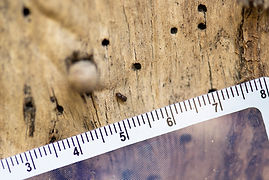
Polyphagous Shot-Hole Borer: Detection, Impact and Management
Presented by Emad Alshwany & Srikanth Gundappagari, DPIRD
12:30-2pm Saturday 19 September 2026
Auditorium
Esperance Civic Centre
While Esperance and other regions of WA are still free from PSHB. there is a risk to regional areas due to the transportation of plant materials including transport firewood.
This workshop, presented by the Department of Primary Industries and Regional Development (DPIRD), will help to increase awareness and build capacity in identifying and managing PSHB infestations if they do arrive here.
It is designed for anyone interested in learning more about PSHB, including community groups, industry representatives, and government staff.
This presentation is accompanied by a display in the auditorium on Saturday 19 and Sunday 20 September.
This is a free workshop. Registration not required.